

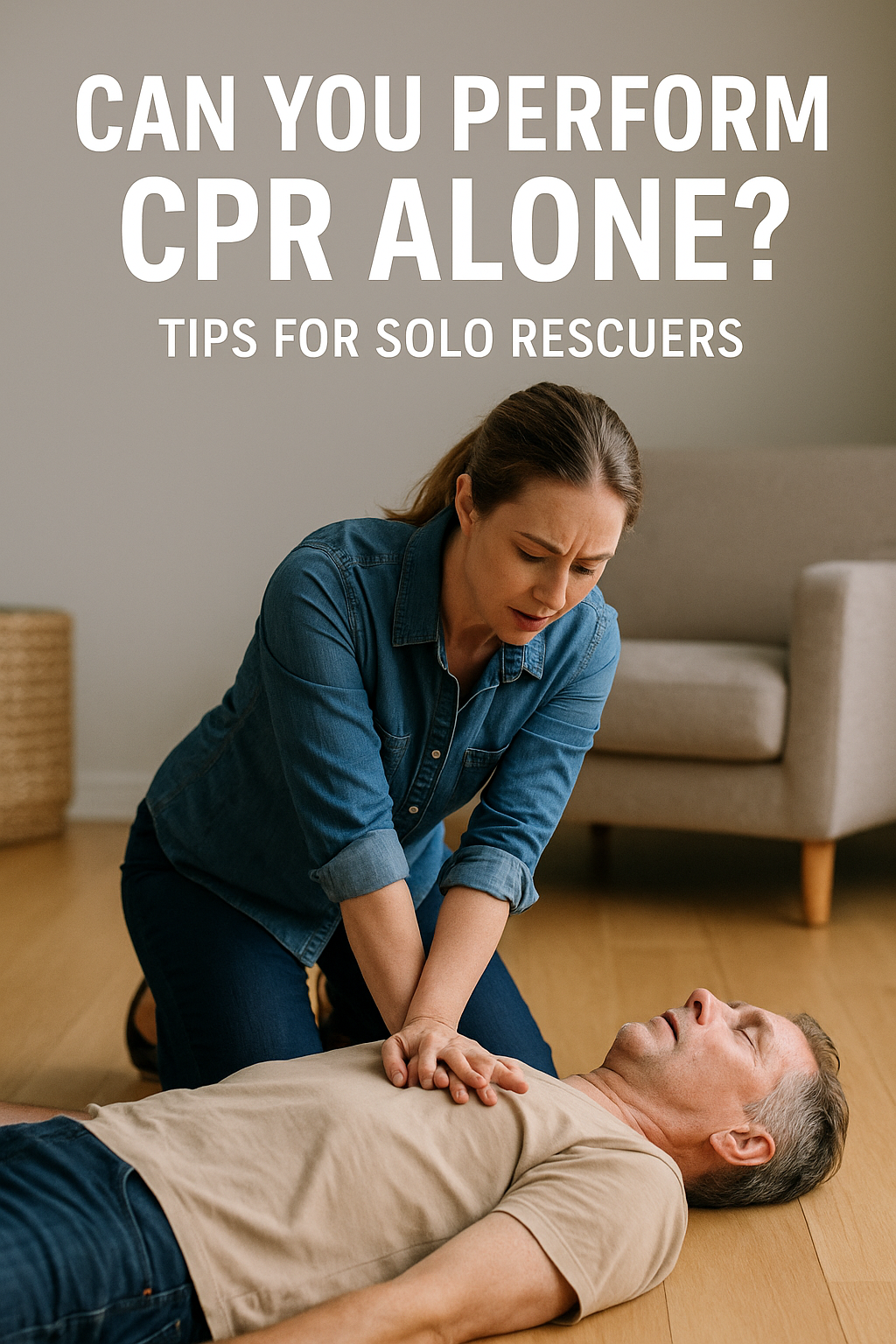
Can You Perform CPR Alone? Tips for Solo Rescuers
When an emergency strikes, you may find yourself completely alone — no one else around to help. It is a scary thought, but it is also the reality for many people who come across someone in cardiac arrest. The good news? Yes — you can perform CPR alone, and your actions can absolutely save a life. Knowing how to respond with confidence when you are the only person there is critical.
Check for Safety and Responsiveness
Before starting CPR, make sure the area is safe for both you and the person — no traffic, fire, or other hazards. Then, tap the person’s shoulder and shout, “Are you okay?” If there is no response and the person is not breathing or only gasping, it is time to act.
Call for Help — Even If You’re Alone
If you are by yourself:
- Use your phone’s speaker mode to dial 911 (or your local emergency number).
- Tell the dispatcher you are alone and about to start CPR.
- They can stay on the line and guide you through every step.
Pro Tip: If an AED (Automated External Defibrillator) is nearby, keep the phone on speaker and start compressions while following the dispatcher’s instructions to retrieve and use the AED safely.
Start Hands-Only CPR
If you are not trained or cannot give rescue breaths, hands-only CPR is highly effective:
- Place the heel of one hand in the center of the chest and your other hand on top.
- Lock your elbows and push hard and fast — at least 2 inches deep at 100–120 compressions per minute (to the beat of “Stayin’ Alive”).
- Allow the chest to fully rise between compressions.
Keep going until help arrives, the person starts breathing, or you can no longer continue. Remember: when you perform CPR alone, effort matters more than perfection.
If You’re Trained — Add Rescue Breaths
If you have CPR training:
- After 30 compressions, give 2 rescue breaths.
- Tilt the head back, lift the chin, and blow until the chest rises.
- Continue cycles of 30 compressions and 2 breaths.
If breaths are not possible or safe, continue hands-only CPR — it is still lifesaving.
Don’t Stop Until Help Arrives
As a solo rescuer, it is normal to get tired. But even compressions that are not perfect still help keep blood and oxygen moving to the brain and vital organs. Persistence is key.
Use an AED as Soon as Possible
If an AED becomes available:
- Turn it on.
- Follow the voice prompts.
- Do not stop CPR unless the device instructs you to.
AEDs are designed to be used by anyone — even without prior training.
After the Emergency
Once help arrives, breathe. Feeling overwhelmed afterward is normal. If you have never taken a CPR class — or if your certification has expired — consider renewing. Skills are easier to use when practiced.
Be Prepared — What You Do Matters
Performing CPR alone can be intimidating, but doing something is always better than doing nothing. Your response can significantly increase someone’s chance of survival before professionals arrive.
To learn life-saving skills and become more confident in emergencies, visit: Health Solutions of America
Ready to take CPR or First Aid training? Contact us.