

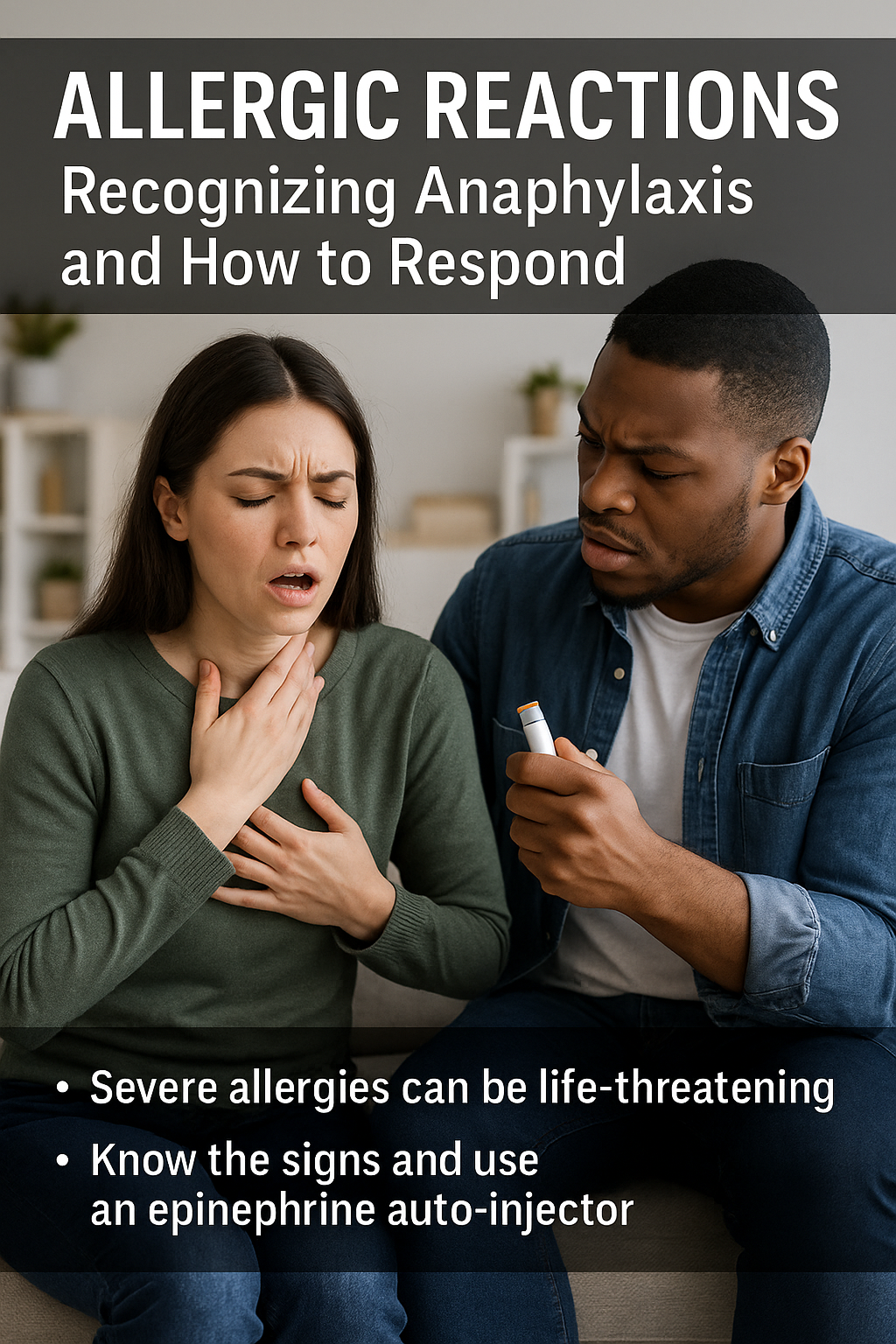
Allergic Reactions: Recognizing Anaphylaxis and How to Respond
Allergies are common, but when they turn severe, they can become life-threatening within minutes. This type of severe allergic reaction is called anaphylaxis, and knowing how to recognize and respond with proper anaphylaxis first aid can help save a life. Whether it happens at home, school, work, or in public, everyone should know the signs of anaphylaxis and what to do while waiting for emergency help to arrive.
What Is Anaphylaxis?
Anaphylaxis is a severe, rapid allergic reaction that affects the whole body. It occurs when the immune system overreacts to a trigger (called an allergen), such as:
- Certain foods (peanuts, shellfish, milk, eggs, tree nuts)
- Insect stings or bites
- Medications (antibiotics, pain relievers)
- Latex
- Severe environmental allergens
Anaphylaxis can cause the airways to tighten, blood pressure to drop, and vital organs to lose oxygen — making it a true medical emergency.
Recognizing the Signs of Anaphylaxis
Symptoms often appear within seconds or minutes of exposure to an allergen. Watch for these warning signs:
Mild to Moderate Symptoms:
- Hives, itching, or skin redness
- Swelling of the lips, eyes, or face
- Stomach pain, nausea, or vomiting
Severe (Anaphylactic) Symptoms:
- Difficulty breathing or swallowing
- Swelling of the tongue or throat
- Dizziness, fainting, or rapid heartbeat
- Feeling of impending doom
- Drop in blood pressure
Tip: Anaphylaxis doesn’t always start with hives or skin symptoms — breathing difficulty and swelling can happen first.
How to Respond to Anaphylaxis
If someone is showing signs of anaphylaxis, don’t wait to see if symptoms improve. Act immediately and apply anaphylaxis first aid:
- Call 911 (or Your Local Emergency Number)
Tell the dispatcher the person may be having an anaphylactic reaction. Time is critical. - Use an Epinephrine Auto-Injector (EpiPen® or Similar)
- Help the person use their prescribed EpiPen® right away.
- Inject in the middle of the outer thigh — through clothing if necessary.
- Hold for 3 seconds, then massage the area.
- If symptoms don’t improve after 5–10 minutes and another injector is available, give a second dose.
- Lay the Person Down and Elevate Their Legs
This helps maintain blood flow. If breathing is difficult, allow a slight seated position. - Stay With Them Until Help Arrives
Monitor breathing. If they stop breathing, begin CPR immediately.
What NOT to Do
- Do not wait for symptoms to worsen before using an epinephrine auto-injector.
- Do not give food or drink, which may cause choking.
- Do not assume one dose of epinephrine is enough — medical care is still required.
Be Prepared — Knowledge Saves Lives
Anaphylaxis can happen to anyone, even without a history of severe allergies. Learning anaphylaxis first aid through CPR and first aid training provides the confidence to recognize emergencies and respond quickly.
To learn more about emergency preparedness and lifesaving training, visit Health Solutions of America.
Ready to take action or schedule training? Contact us.