



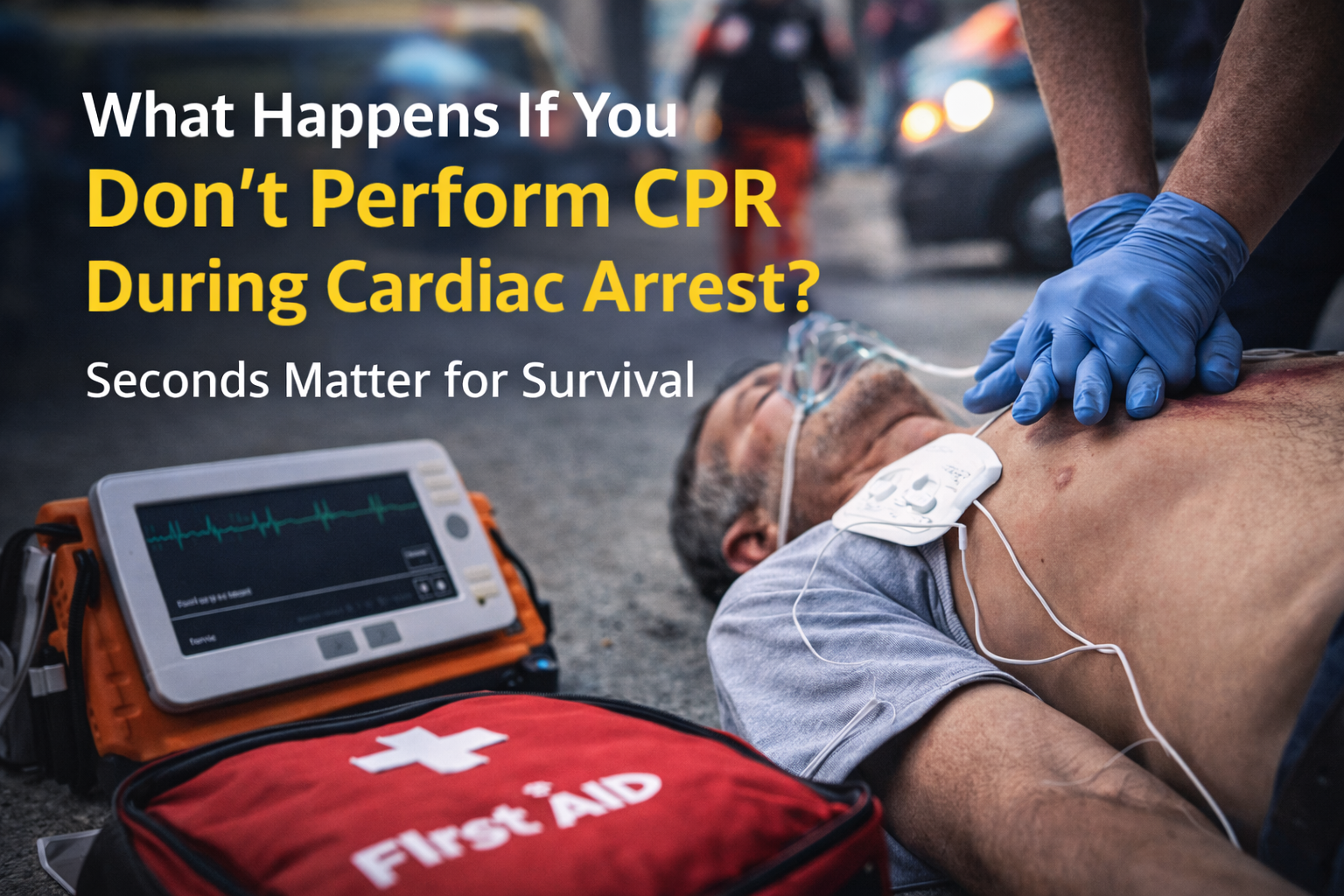
What Happens If You Don’t Perform CPR During Cardiac Arrest?
Cardiac arrest is a sudden, life-threatening emergency that can happen to anyone—anywhere, at any time. When it occurs, every second matters. What happens if you don’t perform CPR during cardiac arrest? The answer is stark: without immediate CPR, survival chances drop rapidly—by the minute.
Understanding the consequences of inaction highlights why CPR training is one of the most important life-saving skills a person can have. With trusted training from Health Solutions of America, individuals can gain the knowledge and confidence to act quickly and give someone the best possible chance of survival.
What Is Cardiac Arrest?
Cardiac arrest occurs when the heart suddenly stops beating effectively. This causes blood flow to the brain and vital organs to stop almost immediately.
Unlike a heart attack, which is caused by blocked blood flow, cardiac arrest is an electrical failure of the heart and requires immediate intervention.
Without help, cardiac arrest is almost always fatal.
What Happens to the Body Without CPR?
1. Oxygen Deprivation Begins Immediately
When the heart stops:
- Oxygen-rich blood no longer reaches the brain
- Brain cells begin to suffer damage within 4–6 minutes
- Loss of consciousness happens in seconds
Without CPR, the brain and organs are starved of oxygen, leading to irreversible damage.
2. Survival Rates Drop Every Minute
For every minute CPR is delayed:
- Survival chances decrease by 7–10%
- After 10 minutes without CPR, survival is extremely unlikely
- Permanent brain injury or death becomes almost certain
CPR doesn’t restart the heart—but it keeps oxygen moving until advanced care arrives.
3. Defibrillation Becomes Less Effective
An AED (automated external defibrillator) is most effective when:
- CPR is started immediately
- Blood continues circulating to the heart and brain
Without CPR:
- The heart becomes less responsive to defibrillation
- AED success rates drop significantly
CPR and AED use work together to save lives.
4. Emergency Responders May Arrive Too Late
Even with fast response times:
- EMS often takes 6–10 minutes to arrive
- Without bystander CPR, critical time is lost
- The outcome is far worse without early intervention
Bystanders are often the first and only chance a person has.
Why Bystander CPR Saves Lives
Studies consistently show that:
- Immediate CPR can double or triple survival rates
- Hands-only CPR is easy and effective
- You don’t need medical experience to help
When CPR is started right away, it buys precious time until professionals take over.
Why People Hesitate to Perform CPR
Common reasons people don’t act include:
- Fear of doing it wrong
- Fear of legal consequences
- Lack of training or confidence
This hesitation can cost a life—but it’s preventable with education and CPR certification.
Does CPR Have to Be Perfect?
How CPR Training Changes the Outcome
CPR training teaches you:
- How to recognize cardiac arrest quickly
- Proper compression depth and rate
- When and how to use an AED
- How to stay calm under pressure
With training, hesitation is replaced by action—and action saves lives.
Final Thoughts: Doing Nothing Is the Greatest Risk
When CPR is not performed during cardiac arrest, the outcome is often tragic—but it doesn’t have to be.
You don’t need to be a healthcare professional to save a life. You just need the knowledge and confidence to act.
CPR training empowers everyday people to step in during critical moments—and those moments can make all the difference.
Be Ready to Act When Seconds Count
Health Solutions of America offers fast, convenient online CPR certification you can complete on your schedule—so you know exactly what happens if you don’t perform CPR during cardiac arrest and are prepared to take action when it matters most.
Get CPR certified today—because when it comes to what happens if you don’t perform CPR during cardiac arrest, doing something is always better than doing nothing.