

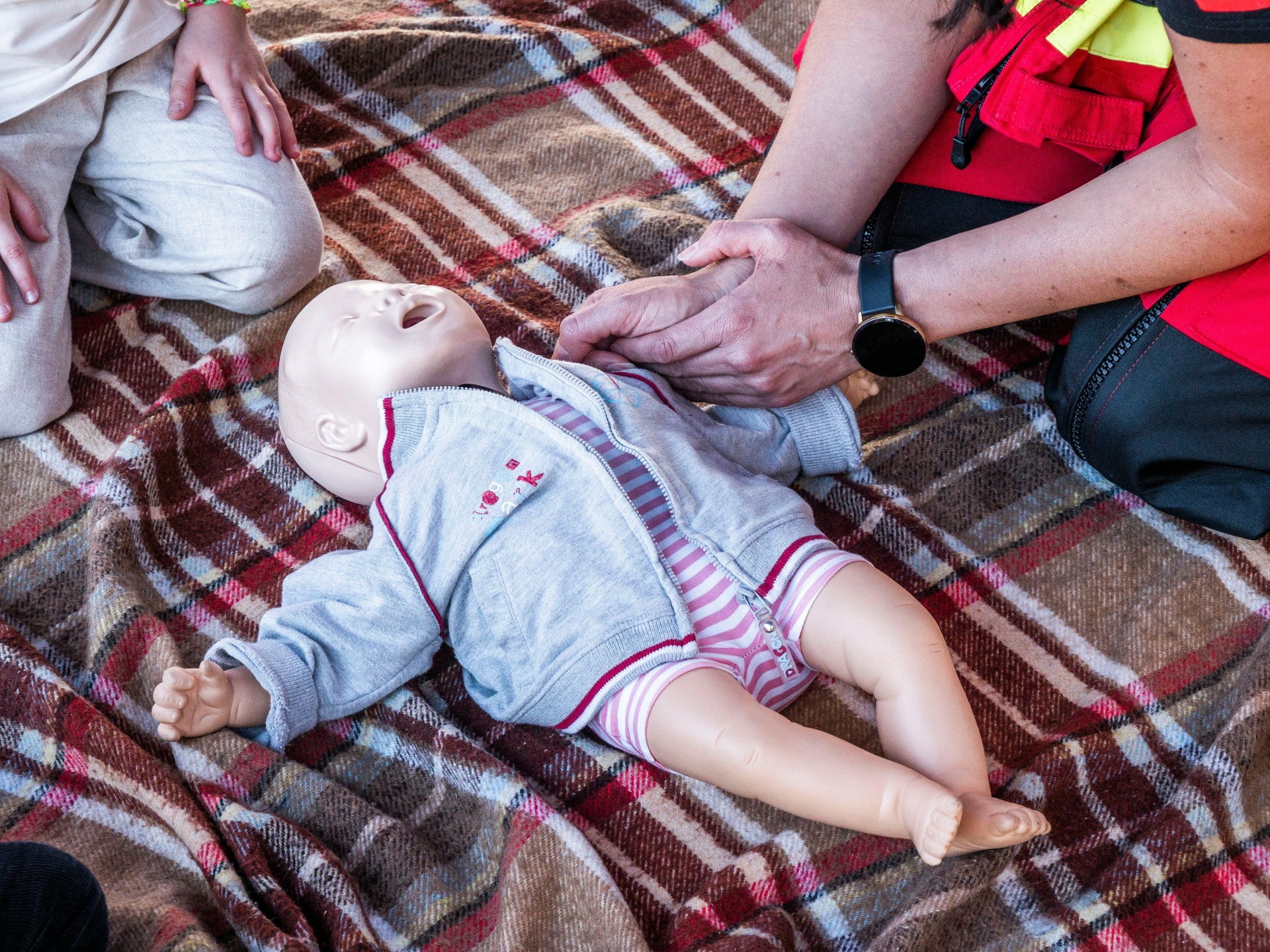
What to Do If a Baby Is Choking?
If an infant is choking, quick and careful action is critical. Below are the steps based on current guidelines. These are for informational purposes, always seek formal CPR and first aid training from a certified provider to ensure proper technique, as incorrect methods can be ineffective or can cause injury.
If you’re in an emergency, call 911 immediately or have someone else call while you act. Understanding infant choking first aid could help save a life.
Steps to Help a Choking Infant:
Assess the Situation:
Confirm the infant is choking. Signs include inability to cry, breathe, or make sounds, weak or no coughing, and even bluish skin which is a sign of oxygen deprivation.
If the infant can cough or cry, encourage coughing and monitor closely without intervening yet, as coughing may dislodge the blockage.
Position the Infant:
Hold the infant face-down along your forearm, with their head lower than their chest, supporting their head and jaw with your hand.
Rest your forearm on your thigh for stability to keep the infant secure.
Deliver Back Blows:
Use the heel of your hand to give 5 firm back blows between the infant’s shoulder blades.
Deliver each consecutive blow with enough force to dislodge the obstruction, but be cautious to avoid excessive force.
Perform Chest Thrusts:
If back blows don’t work after 5 attempts, turn the infant face-up on your other forearm, keeping their head lower than their chest.
Place two fingers (index and middle) on the center of the chest, just below the nipple line.
Give 5 quick chest thrusts, pressing down about 1.5 inches (4 cm) at a rate of one per second.
These thrusts mimic CPR compressions but are sharper to dislodge the blockage.
Repeat and Check:
Alternate between 5 back blows and 5 chest thrusts until the object is dislodged, the infant can breathe or cry, or they become unresponsive.
Check the mouth after each cycle. If you see the object and can easily remove it with a finger sweep, do so carefully, but never perform a blind finger sweep, as it can push the object deeper.
If the Infant Becomes Unresponsive:
If the infant stops breathing or loses consciousness, begin infant CPR immediately.
Call 911 if you have not done so already. We recommend you turn on the speakerphone and set the phone down, which will allow you to communicate with dispatch while still having two hands free to provide CPR.
Infant CPR involves 30 chest compressions using two fingers just like you used for the chest thrusts, pushing down 1.5 inches deep and at a rate of 100–120 per minute followed by 2 gentle rescue breaths by covering the infant’s mouth and nose with your mouth. The volume of breath should only be enough to make the chest rise, which doesn’t take much. Continue cycles of 30 compressions and 2 breaths until help arrives or the infant responds.
Seek Medical Attention:
Even if the choking is resolved, it is recommended to have the infant evaluated by a healthcare provider to ensure there is no injury or residual obstruction. Prompt follow-up is a key part of proper infant choking first aid.
Need Certified Training in Infant Choking First Aid?
Do you need more comprehensive training and/or certification in infant choking first aid? Visit us at www.healthsolutionsofamerica.com to learn more about our classes and certifications.